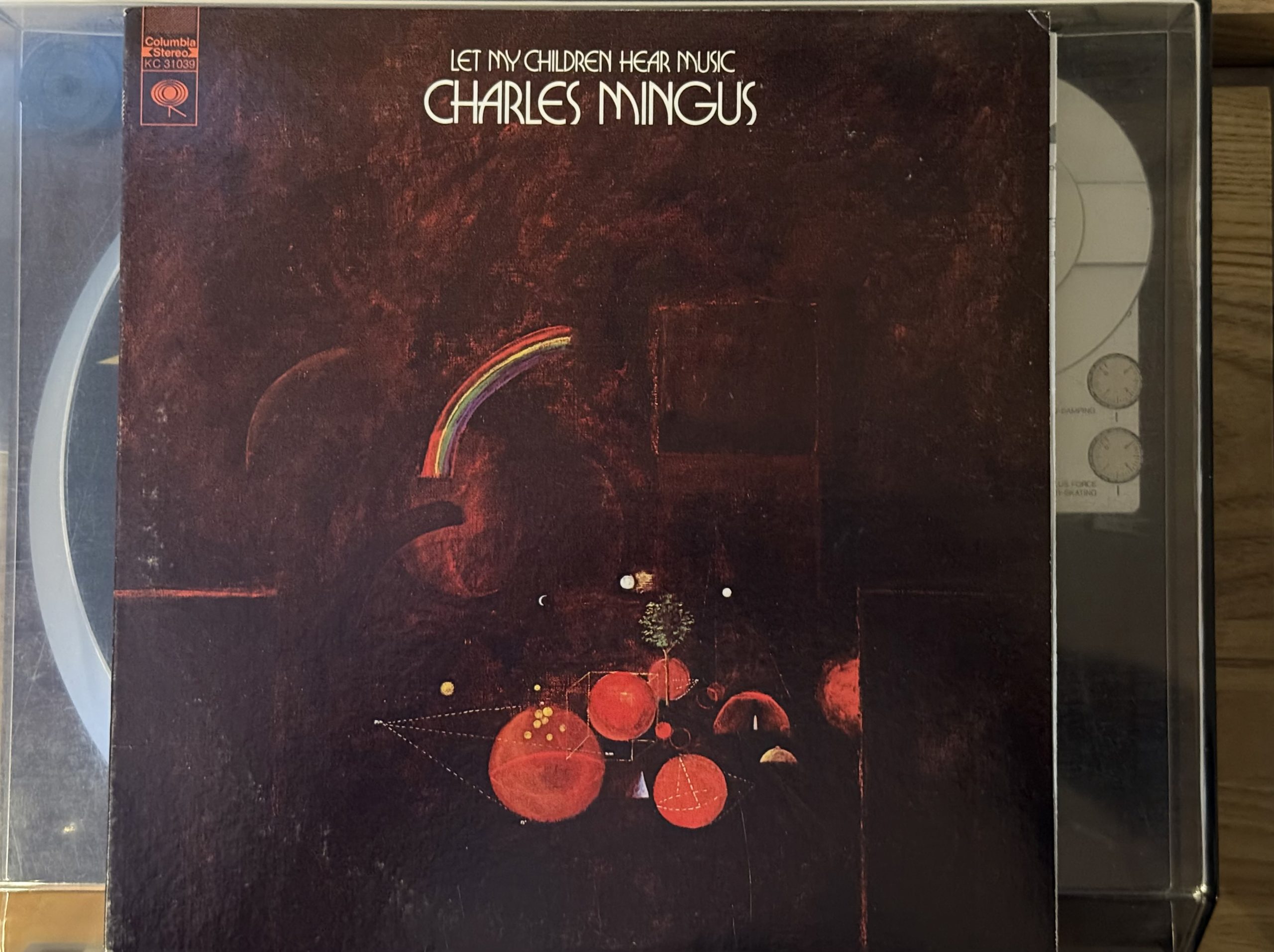
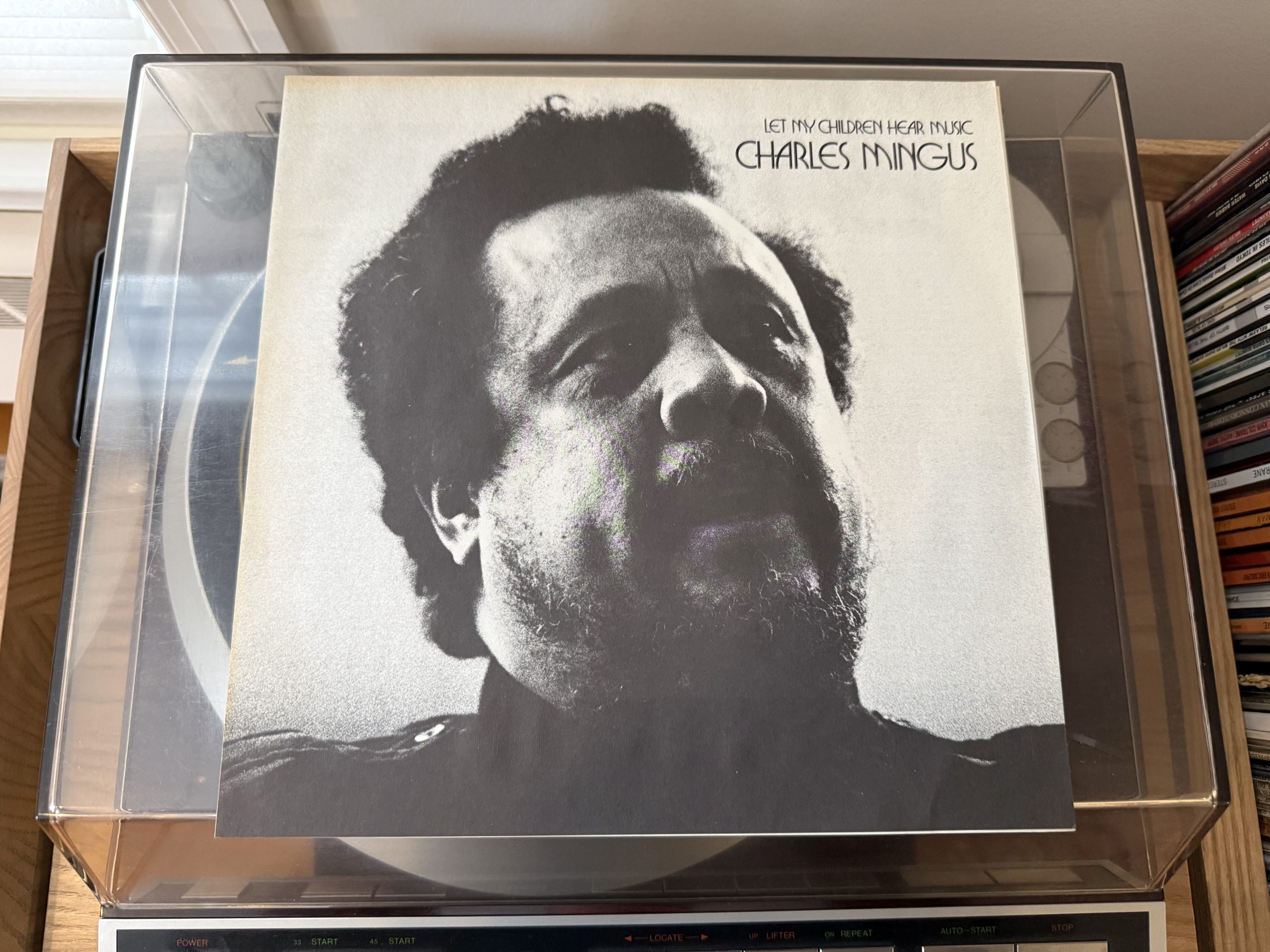
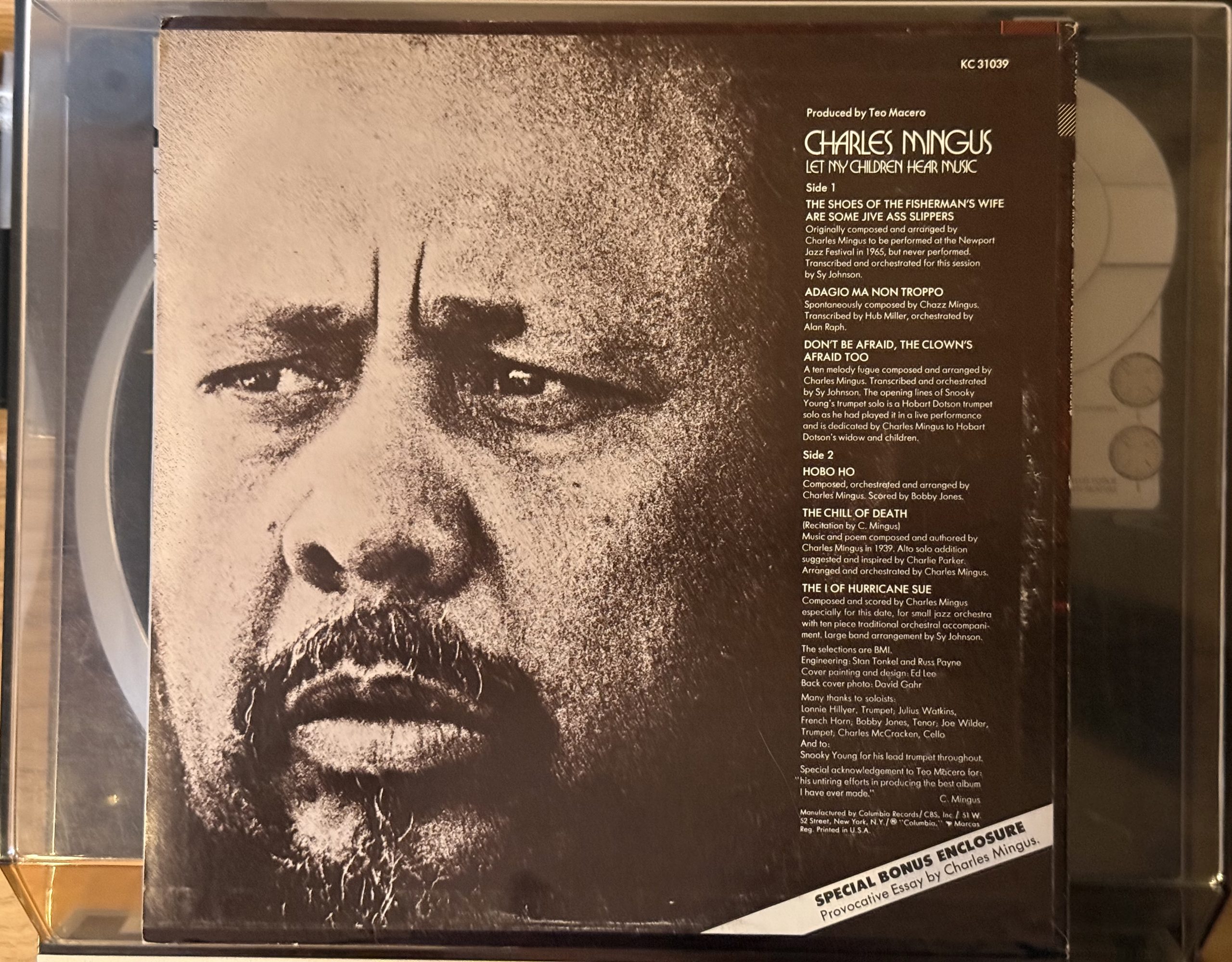
Charles Mingus, Let My Children Hear Music

The last great composition from Mingus sums up all his contradictions into a single masterpiece.

Album of the Week, February 14, 2026

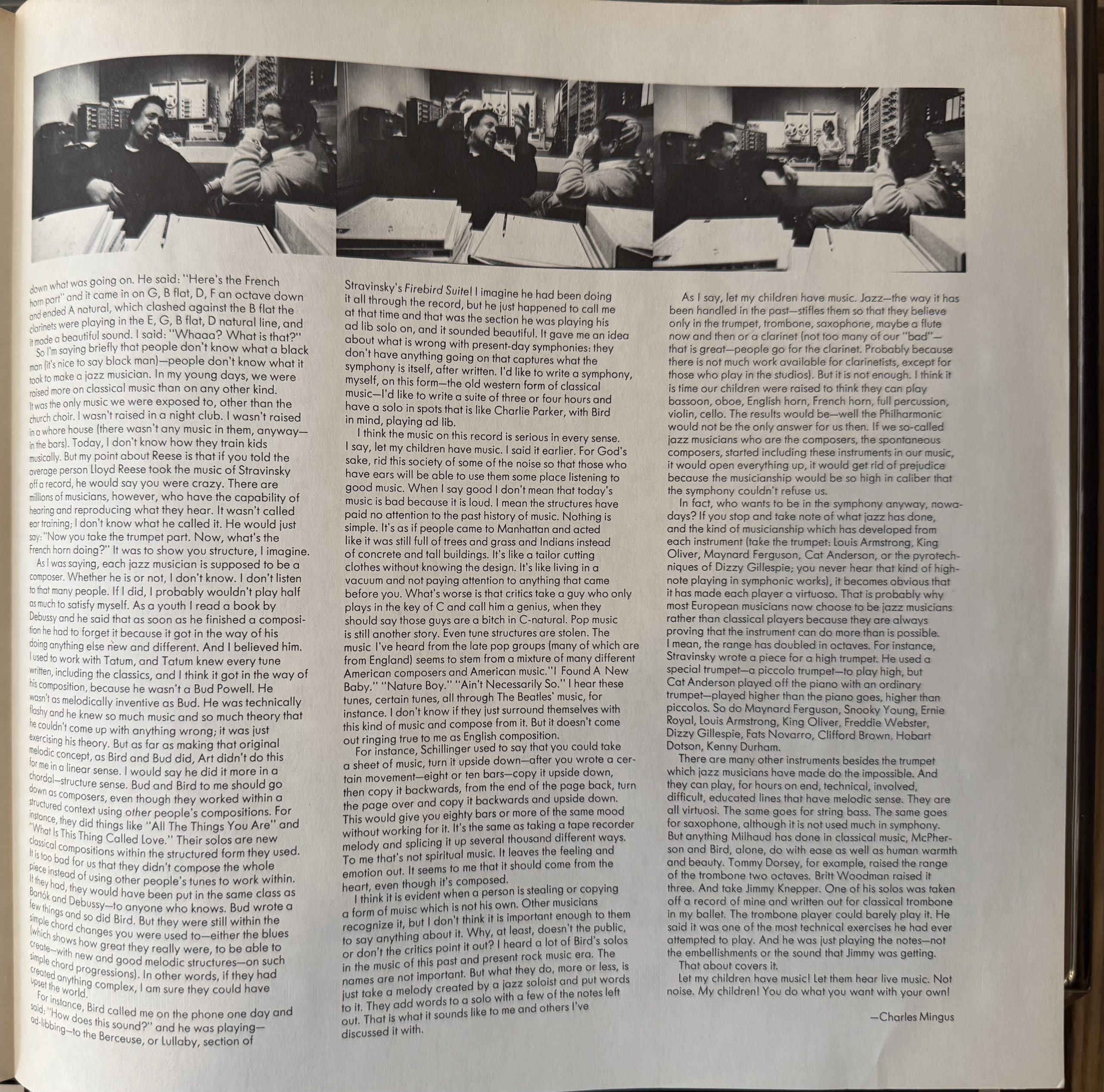
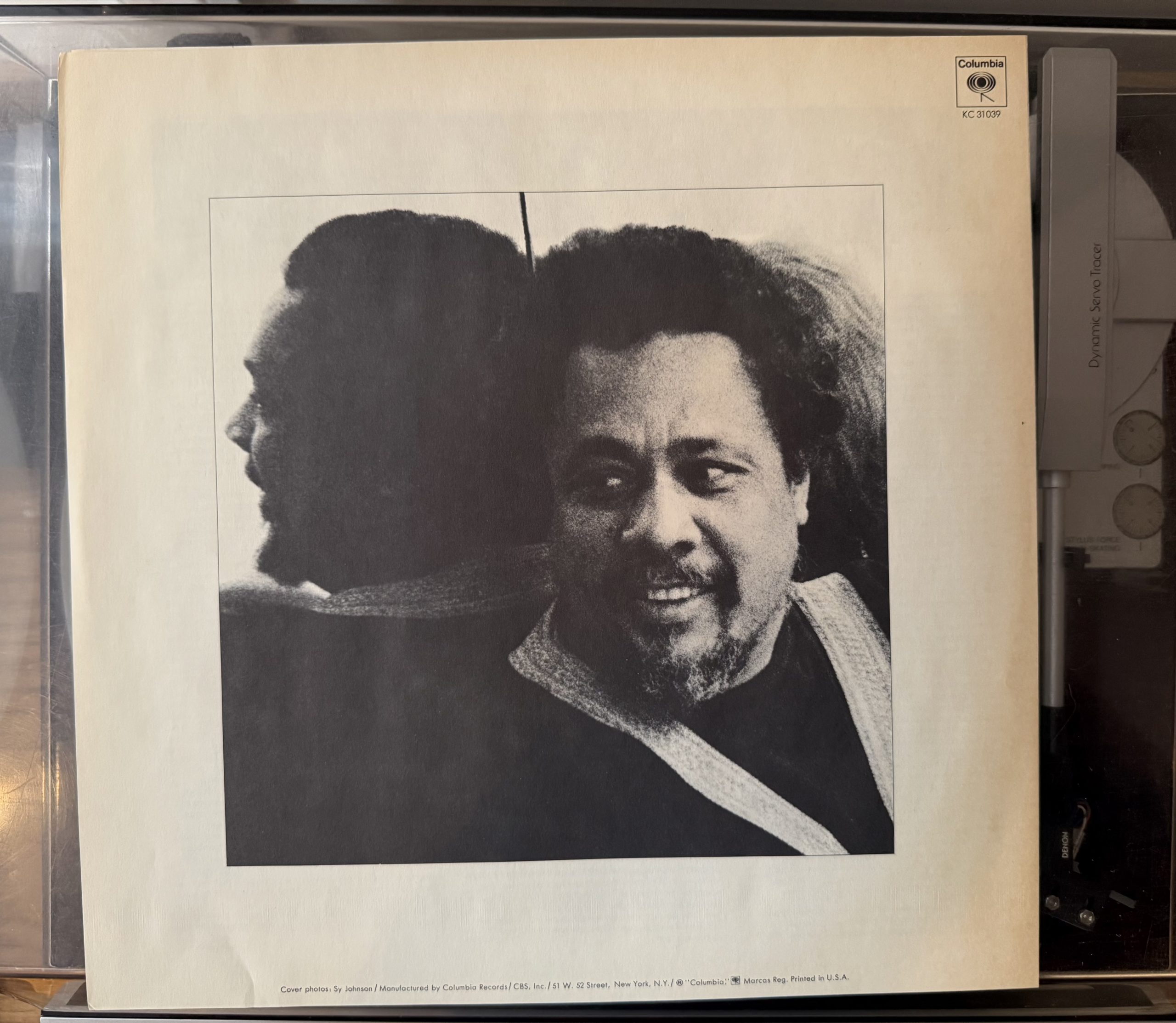
When we last checked in with composer and bassist Charles Mingus, he was on a career high that was about to enter a downturn. Following Mingus at Monterey, he toured heavily but was without a recording contract, and was evicted from his apartment for nonpayment of rent in 1966. But Mingus seems to have always had the ability to convince the labels to place a bet on him, and the fall of 1971 found him working again with Columbia’s Teo Macero on a big-band recording of all-new compositions.

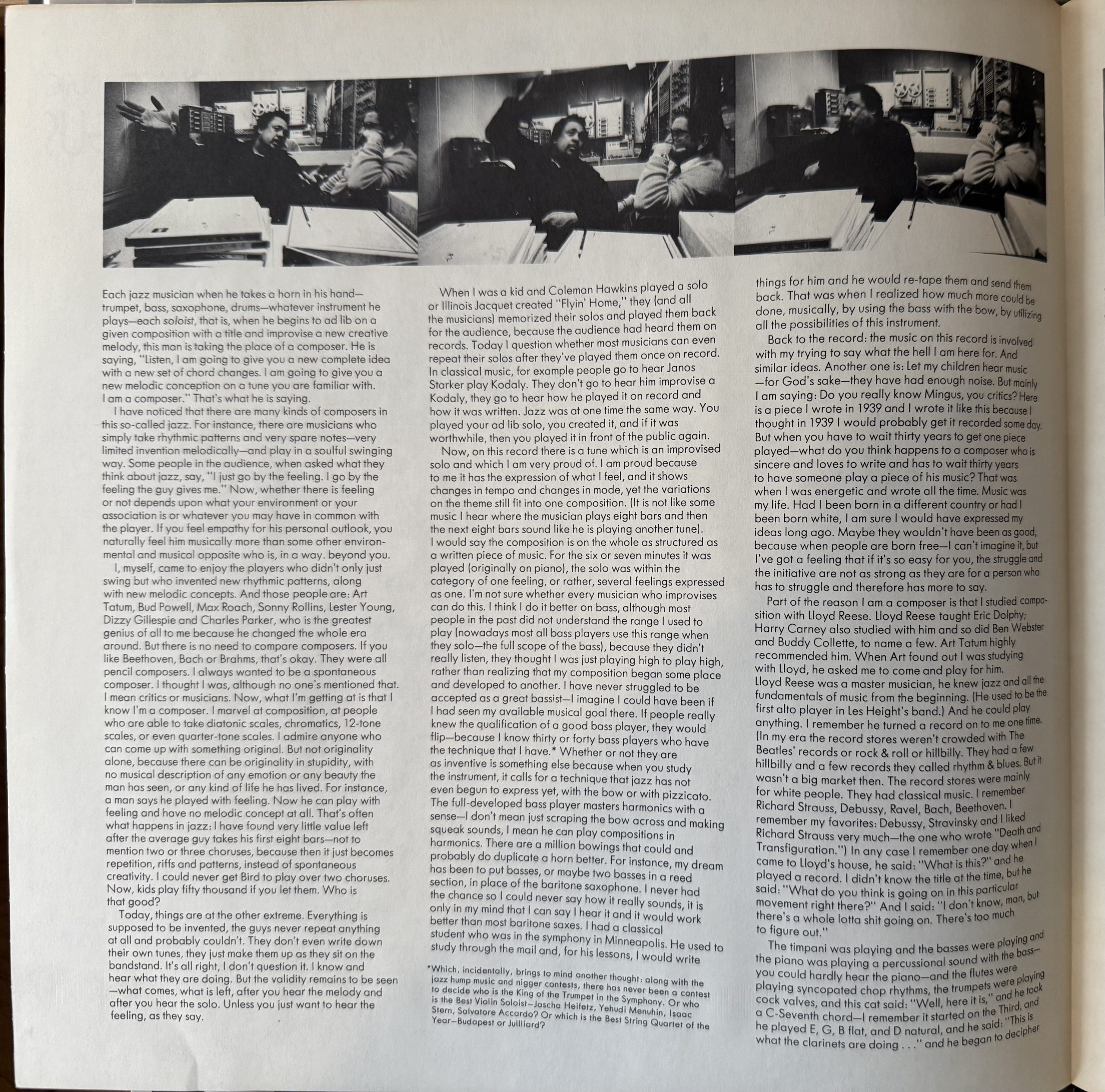
And what a band! Across six recording sessions between September 23 and November 18, a small army of musicians worked on the recording that became Let My Children Hear Music, including Lonnie Hillyer, Jimmy Nottingham, Joe Wilder, and Snooky Young on trumpet, Jimmy Knepper on trombone, Julius Watkins on French horn, Charles McPherson on alto sax, Jerry Dodgion, Bobby Jones, Hal McKusick and James Moody on reeds; Charles McCracken on cello; Jaki Byard, John Foster, and Roland Hanna on piano; and Dannie Richmond on drums. Teo not only produced but also conducted the orchestra and played some alto sax. And alongside Mingus’s bass were three additional bass masters—no less than Ron Carter, Richard Davis, and Milt Hinton. And those are only the musicians we know about—some remain uncredited on the recording due to contractual issues. Collectively they gave Mingus’s music a sound that he had never gotten on record before, with a combination of power and polish.
The Shoes of the Fisherman’s Wife Are Some Jive-Ass Slippers” might be my favorite Mingus title of all time, even considering that this is the man who wrote “All the Things You Could Be By Now If Sigmund Freud’s Wife Was Your Mother.” From the very beginning of the track we get two impressions: this music is ambitious, and this band is tight. The horns and reeds play the opening melody slowly against a chromatic scale in the bass and low instruments; there’s a coda of sorts to this part signaled by an “Also Sprach Zarathustra” timpani roll, a series of chord changes, and then we’re into a brisk waltz that pauses, then shifts into 6/8 time. The horns and reeds introduce a descending motif that keeps interrupting the waltz until the piano signals another transition and a recapitulation of the top melody. This time the band picks up a new version of the slow theme in a fast 4/4 time, that builds in intensity up the chromatic scale until there’s a sudden swoon and lapse back into waltz time. We’re left to wonder how many of the sudden shifts were scored and how many were the product of Teo Macero’s genius editing skills. All throughout the chord progressions and gestures are wild and free (that timpani glissando against the descending motif at the end!) and the band swings as hard as anything Ellington ever did.

Adagio, Ma Non Troppo” begins with a lone reed followed by a lone flute, playing music that seems birthed from “Sketches of Spain.” There are interludes of piano and guitar, rafts of flutes and clarinets, and a fast dance with three arco basses all soloing at the same time. True to the title, some moments are downright symphonic here; this section is probably the least swinging on the record, but those bowed bass solos keep us grounded at the same time that they reach for the stars. When the saxophones take the theme it feels like a moment from a Keith Jarrett European quartet composition.1 The whole thing is breathtaking in both composition and performance.
Don’t Be Afraid, The Clown’s Afraid Too” starts in the circus, with recorded lion roars and elephantine trumpet blasts, before the band swings into a circus theme underscored by oompa bass and tuba and a brilliant walking bass line. The simultaneous solos between tenor sax (right channel) and alto sax (left) stretch the brain to hear all the passing harmonies as the players cross over and solo past each other. Another circus interlude and a brisk Mingus pizzicato solo sets up a chorus of twittering bird flutes, and the rest of the track tosses the theme from section to section before returning to the oompa theme once more before returning to the circus again to take us out of Side A.

Hobo Ho” opens with a gutsy, funky bass line that anchors us firmly in the tonic. The tenor sax sets up the first melody with almost subsonic support in the lowest instruments. There are horn bursts that wouldn’t have been out of place on The Cat. This is music for a rumble, standing alongside “II B.S.”/“Haitian Fight Song” as some of Mingus’s most groove-driven work.
The Chill of Death” begins with a Mahlerian moment, a tremolo from the basses over a timpani hit and the orchestra. Mingus recites a poem that dates from the beginning of his career; written in 1939, it captures the constant tension in his work between wild life and the fear of being forgotten in death. After the recitation there’s a sustained organ tone and a free alto sax solo by Charles McPherson over a shifting, uneven instrumental background—sometimes marching to the graveyard, sometimes joyfully dancing, sometimes anxiously peering around the corner. The piece ends with a rare audible splice as McPherson plays into a descending glissando and crescendo by the rest of the band; I wonder how much improvisation was left on the cutting room floor by Macero.

The I of Hurricane Sue” ends where we began, the second piece recorded in the very first session. There are wind effects and corrugaphones beneath a free intro before the band snaps into a tightly wound, swinging melody. The work ends with dueling pianos, Jaki Byard vs. Roland Hanna, as the whirly tube and winds blow us away. This characteristic of alternating chaos and gorgeously played symphonic jazz is what ultimately sets Let My Children Hear Music apart as a work of staggering genius and an apex of Mingus’s compositional career.
The brilliance and tragedy of Mingus’s life wasn’t yet done. He had a few epochal albums for Atlantic Records, Changes One and Two, ahead of him, but he also had a deeper challenge—ALS, which began to rob him of his mobility and his ability to perform. As a composer and bandleader, he still had some milestone records ahead and we’ll hear one last one next week.

You can listen to this week’s album here:

BONUS: There is an honest-to-goodness bonus track, in the original CD reissue sense, on Let My Children Hear Music. Recorded on the second recording date (September 30) following “Hobo Ho,” “Taurus in the Arena of Life” was first issued in 1992 on the first CD release of the album. It’s a nifty hybrid between a classical sonata in the piano and a blues in the horns, who take a trip to Mexico where things get marvelously strange.

BONUS BONUS: There are a few attempts to play this music live out there, but not many—which is why it came as a shock to find this sextet performance from a jazz ensemble in the University of Virginia’s Old Cabell Hall Auditorium, of all places! I don’t think that’s any of the main faculty up there, but I can’t see the bassist so it just might be Pete Spaar.

  1. Don’t worry, you didn’t miss a week. We’re not to Keith yet, but we’ll get there eventually. ↩︎
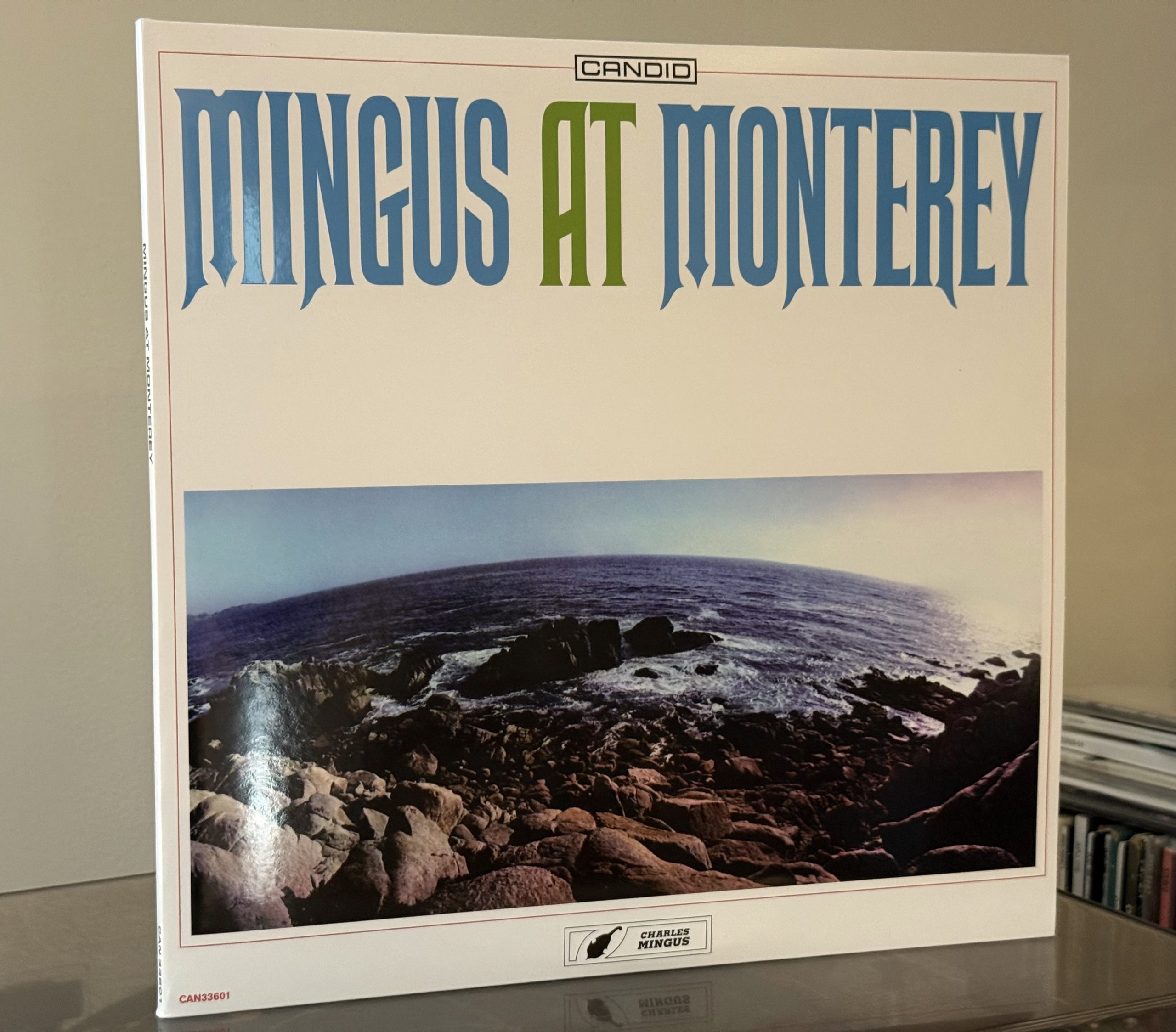
Charles Mingus, Mingus at Monterey

From Mingus’s golden year, a spectacular live set with something old, something new, something borrowed, and something blue.

Album of the Week, February 7, 2026

Last week we witnessed Charles Mingus solidifying his place in the pantheon with an album that realized some of his greatest compositions with definitive performances (and contractually required placeholder titles). As we noted, Mingus Mingus Mingus Mingus Mingus marked the reunion of the great bassist and his avant-garde compatriot Eric Dolphy. Mingus took the band on tour to Europe; Dolphy stayed there and died in a diabetic coma.

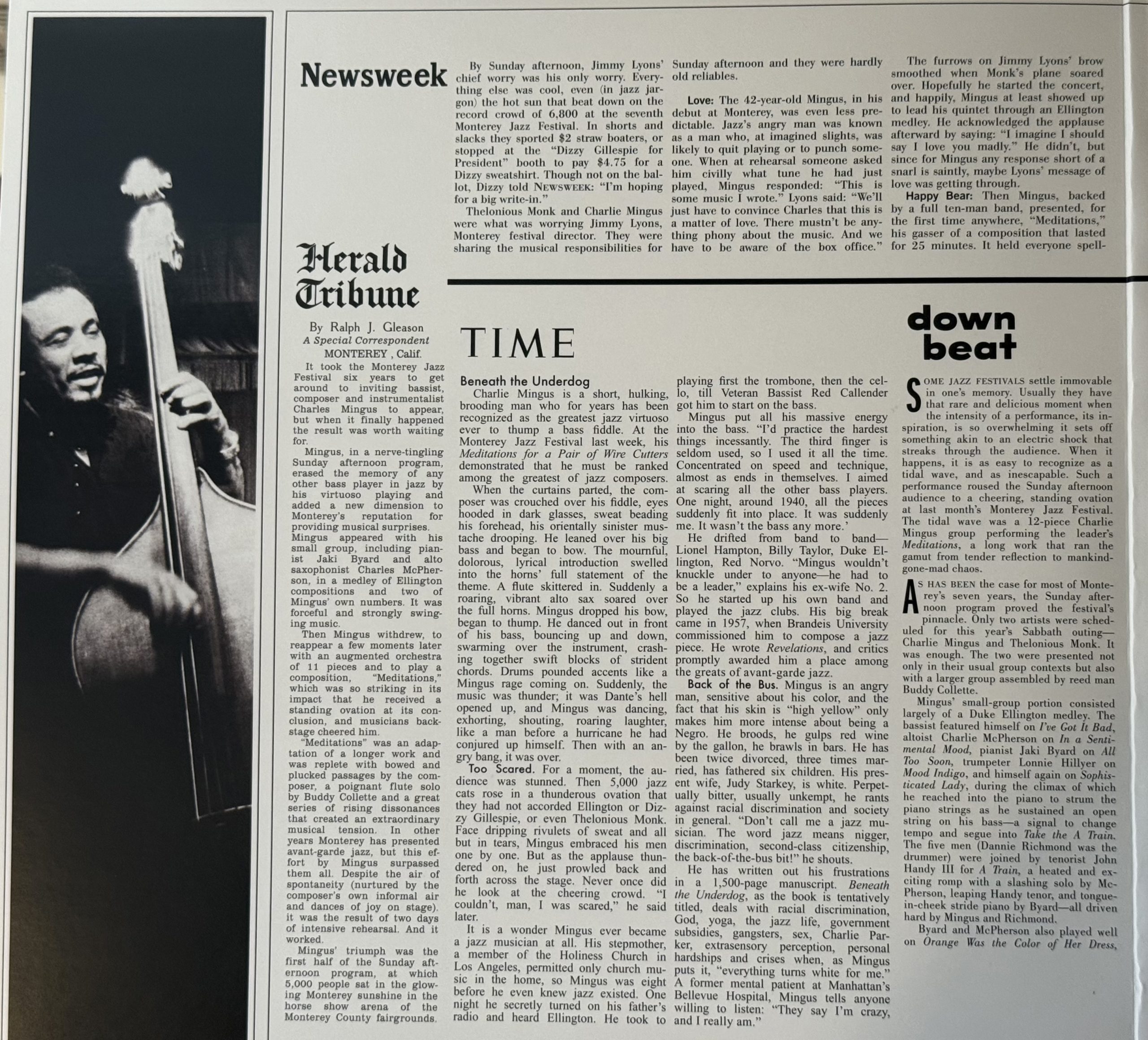
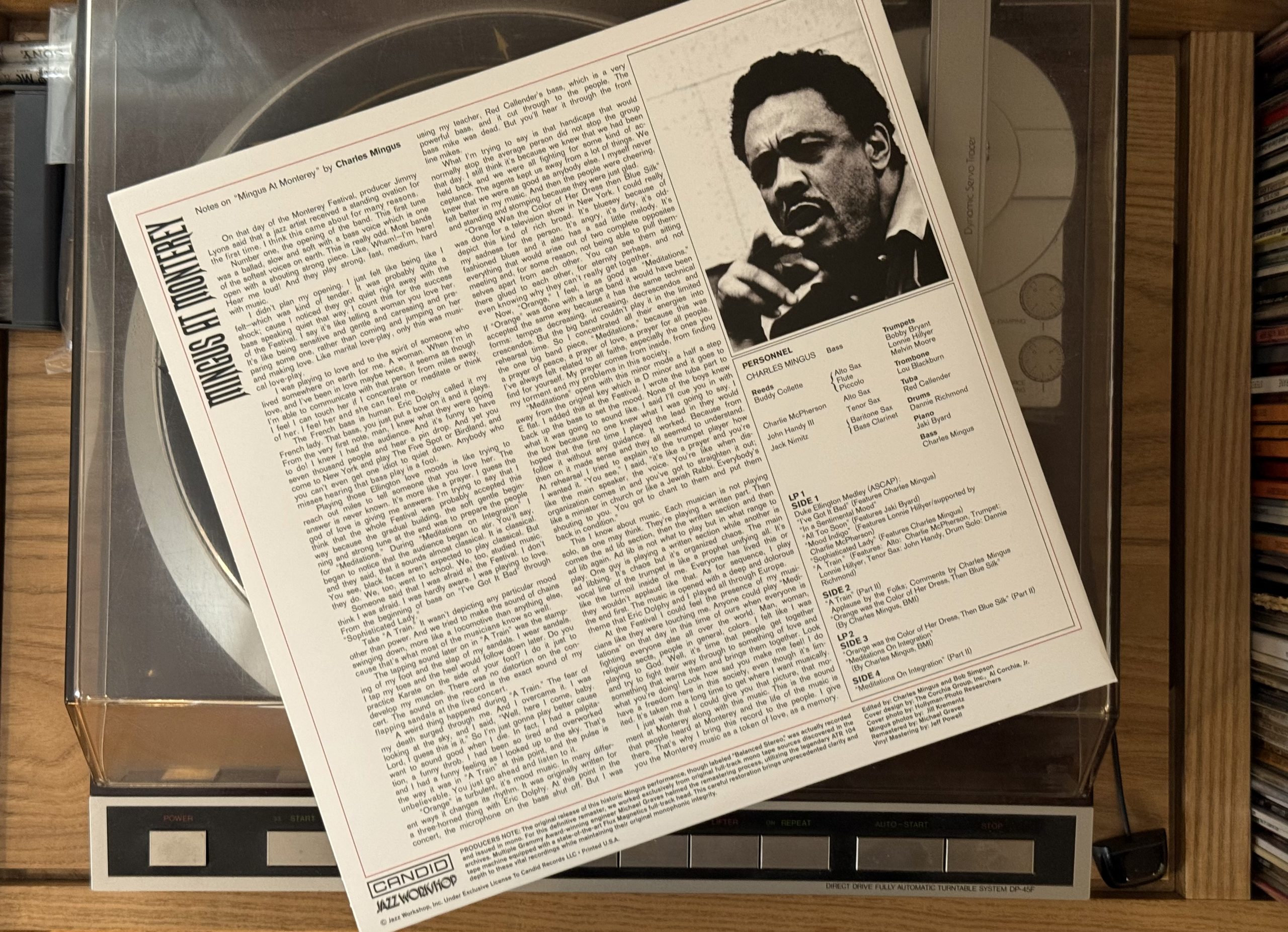
Given these facts, one could forgive Mingus for falling back to the familiar and focusing on that “greatest hits” repertoire, or from pulling back from touring and performing. Fortunately for us, the way Mingus dealt with challenges was to work and to create. His performance at the Monterey Jazz Festival on September 20, 1964 captured him doing both, with a band that had a rhythm section of Mingus stalwarts (Jaki Byard, Dannie Richmond) and a horn line consisting of Lonnie Hillyer on trumpet, Charles McPherson on alto and John Handy on tenor; Handy, an old Mingus band hand, rejoined at the last minute after Booker Ervin was hospitalized. For the last number, the band expanded into a big band formation, with Bobby Bryant and Melvin Moore on trumpet, Lou Blackburn on tuba, Red Callender on trombone, Buddy Collette on flute, piccolo and alto, and Jack Nimitz on bass clarinet and baritone sax. The performance gives us something old and borrowed, something new, and something blue (and orange).

The “Ellington Medley: I’ve Got It BadIn a Sentimental MoodAll Too SoonMood IndigoSophisticated LadyA Train” is our “old and borrowed” segment, continuing Mingus’s exploration of the compositions of his inspiration, one-time boss and sometime sparring partner Duke Ellington. The band is relaxed; there’s a little stage chatter before Mingus takes a solo intro to “I’ve Got It Bad” with sparse accompaniment from Jaki Byard, and sensitive solos from McPherson and Byard. One Ellington classic flows into the next, all commented on from Mingus’s bass.1 Until, with a sudden break, we are taking the A Train. The band is jubilant to the point of almost unhinging, particularly Lonnie Hillyer’s imaginative trumpet and Handy’s tenor (the only shortcoming in the live recordings: the tenor saxophone is somehow overpowered by Byard’s piano). At the end there’s an unaccustomed solo from Richmond, showing that not only was he frequently the glue that held the adventuresome band’s performances together, but he could also blast a mean drum solo. The end dissolves into almost-dissonance, the band gasping over the final diminished chord. To the enthusiastic applause of the crowd, Mingus notes, “I imagine I should say ‘I love you madly’ at this point… Because, ah, if there is a recording, all the money will go to Duke Ellington, which is about due him; I’ve stole enough.”

Mingus announces “Orange Was the Color Of Her Dress, Then Blue Silk”; it’s a blues introduced with a shivering run in the bass over a stride influenced piano line. The trumpet and alto state the tune (Handy, from Mingus’ announcement, sat this one out because he had only had one day to learn the material!). Then suddenly we’re leaving the blues behind, falling into a woozy delirium that improvises on the chords and promptly lands us right back into the blues. McPherson’s solo continues to explore the tune in free time, but always coming back to the blues at the end, stretching the twelve-bar form to untold lengths. Byard’s statement anchors firmly in stride and the gospel blues, with the band smearing glissandi and shouting behind him, until everyone drops out and he plays something closer to a sonata. The kaleidoscope shifts again; Hillyer is here with something halfway between New Orleans and the Village Vanguard, then the band returns to that stretched out blues once more, leaning into it until the penultimate bar stretches out the seconds, finally turning into an unresolved sigh. (On the two record set, the composition splits between the back half of Side B and into the first half of Side C.)

Mingus announces “We’ll be back with more musicians,” and with the full band on stage launches into the arco solo that opens the premiere of “Meditations on Integration.” Out of a brief tune-up moment comes Mingus’ opening arco solo, sounding like a combination of the Beethoven 9 basses and the hora. The band enters with a busy line that Buddy Collette’s flute flies and darts above; McPherson’s alto answers with an anguished cry above the ongoing Stravinskyan rhythm of Mingus, Richmond and Byard and the stabs of horns from the rest of the band. Things threaten to dissolve into formlessness as Byard thunders on the low tonic and the band plays the chords of the melody in sequence, almost as choral interjections. McPherson returns to the melody as the band recapitulates the opening, rising to a chaotic crescendo out of which a duet of flute and low piano emerges. The band continues in this vein for some time, with Collette’s flute signaling turns in the melody and changes in the solo.

At almost 14 minutes into the tune there is a breathtakingly high bowed bass solo that sounds for all the world like a cello has appeared on the stage. Mingus plays a low stretto on the tonic and diminished supertonic as Byard speaks once more with moments of Liszt and Bud Powell; the duet between the two is an elegy from which Collette’s flute emerges once more, Ravel-like. A tremolo from Byard and rapt applause from the audience seem to signal another shift, but the interplay between Byard, Mingus and Collette continue until Mingus’s high shout calls Hillyer forward. The liner notes report a rehearsal conversation between Mingus and Hillyer, in which the composer tells him, “It’s like a prayer and you’re like the main speaker… Everybody’s shouting to you. You got to chant to them and put them back in condition.” And so the final portion goes, with the whole band hollering and Hillyer’s voice conjuring order forward. When the final chord comes, the audience gives Mingus a thundering standing ovation, the first in the entire history of the festival.

1964 was a career peak for Mingus; unfortunately, tough times were ahead. In 1966 he was evicted from his New York home; the only recordings to appear for the rest of the decade were older session recordings (Tonight At Noon, from 1957 and 1961 sessions for Atlantic records, is a classic) and live recordings from tour dates in Europe and America. That long drought would end in the early 1970s with a recording we’ll listen to next time.

You can listen to this week’s album here:

BONUS: Mingus’s tour of Europe with Eric Dolphy yielded early performances of “Meditations on Integration” and “Orange Was The Color of Her Dress, Then Blue Silk,” including this audio recording from the Salle Wagram in Paris on April 17, 1964:

  1. I believe one of the inspirations for Mingus’s bass technique is the contrabass recitative at the beginning of the fourth movement of Beethoven’s 9th Symphony. Like Beethoven’s basses, he was always observing the performance and the melody closely, and always, always opining. ↩︎

Kenny Burrell, Have Yourself a Soulful Little Christmas

A cool Yule is in the brilliant and sure hands of this master guitarist.

Album of the Week, December 6, 2025

The dirty little secret of Christmas albums is that a lot of them sound the same. You tend to hear the same arrangements, or arrangements of the same arrangements, of the same Christmas carols and holiday songs over and over again. When an original voice comes along in the genre, it’s a welcome improvement. Such is the case of Have Yourself a Soulful Little Christmas, the sole holiday album by guitarist Kenny Burrell, released on the Cadet label (home of Ramsey Lewis) in 1966 and arranged by bassist, composer and producer Richard Evans.

We’ve encountered Kenny Burrell many times, all in the company of Jimmy Smith so far. But the guitarist was so much more than a sideman. As a leader, he recorded sides for Blue Note, Prestige, New Jazz (with John Coltrane!) and Verve before recording his first record on the Cadet label (formerly Argo Records, the jazz subsidiary of Chess Records) in 1966. This holiday album followed the same year. Backed with an uncredited orchestra, Burrell’s performances over Davis’s arrangements give both blues and soul, but also unexpected tenderness.

The Little Drummer Boy” is an unlikely opener, combining the familiar Harry-Simeone-via-Trapp-Family-Singers carol with a steady rhythm section that is, honest to goodness, a direct lift from Ravel’s “Bolero.” Burrell gives us a fairly straightforward reading of the tune, but the solo soon stretches out into a bluesy groove as he takes the guitar higher and higher, with splashes of soul jazz piano and a horn section that grows in prominence but never overwhelms. It’s a masterpiece of a slow burn, with the cool hand of Burrell at the center of it all, right up to the fadeout.

Have Yourself a Merry Little Christmas” is a quieter, more introspective take on the dark side of this familiar Hugh Martin/Ralph Blane tune. Burrell’s playing is absolutely straight here, with the subtlest of string arrangements underscoring the melancholy of a Christmas song whose original lyrics ran “One day soon we all will be together, if the fates allow/Until then, we’ll have to muddle through somehow.”

It surely took a fair amount of gumption to assay a jazz version of “My Favorite Things” in 1966, following John Coltrane’s definitive rendering of the tune in 1961. Burrell and Evans take the tune to a bluesier place, starting with the time signature, a swinging four-four instead of the waltz. But there is some of the transcendence of the Coltrane version in the brief few measures of the bridge before Burrell’s guitar rips through a series of fiery blues licks up until the fade-out.

Away In a Manger” begins with a solo prelude by Burrell, into the first verse which is played entirely by him and a string section. The bass joins on the second verse; the entire thing is played like a quiet offering, with just enough gospel around the edges to make it a delight.

Mary’s Little Boy Chile” was not exactly a Christmas-album mainstay even in 1966, but was still widely recorded elsewhere. Introduced by Harry Belafonte ten years earlier, it was written by the great composer and arranger Jester Hairston, who was also responsible for the spectacular arrangement of “Amen” that appeared in the Sidney Poitier film Lilies of the Field. Here the arrangement is simple, just Burrell with percussion and a restrained string section, allowing the calypso to shine forth. The woodwinds join in the last chorus to add a little more gentle oomph.

Burrell’s “White Christmas” is cool and relaxed, with an extremely laid back bassist, piano, and brushes on the drums the only accompaniment. But it carries power and intensity through its simplicity, closing out side one.

God Rest Ye Merry Gentlemen” is a more full-bodied opener for side two, with touches of “Greensleeves” (which Burrell had just recorded earlier that year with Smith) in the arrangement. Burrell’s playing here is cool and precise against a steady backbeat from the rhythm section, but the overall arrangement moves along. “The Christmas Song” has a similar vibe but with more varied instrumentation; French horn and xylophone curl cosily at the edges of the strings, leading into a double-time solo by Burrell that raises the heartrate a good 10-15bpm before relaxing back into a chair by the fire.

Children, Go Where I Send Thee” is another less traditional choice in a spectacular arrangement. The tune is played with equal parts gospel—every bit as much of a rave-up as the Fred Waring version with full choir—and Blues Brothers-style R&B, with a Hammond organ peeking through the horns.

Silent Night” gets a mighty gospel arrangement, anchored by the bass and a rolling gospel piano. Burrell’s solo sings without shouting, using chords and octaves for emphasis and power without ever losing the tenderness at the heart of the tune. The “Twelve Days of Christmas,” by contrast, is playful, Burrell’s guitar breakdown on the second day mercifully taking us away from the monotony of the repetitious arrangement. The playing is enough fun that one regrets the band only goes through four days (and three key changes).

Merry Christmas Baby” is an R&B Christmas song written by Lou Baxter and Johnny Moore; the latter’s Three Blazers recorded the tune with Charles Brown providing vocals and it’s since become a staple of blues and R&B Christmas recordings. Here it provides a purely blues closer, with piano, Hammond, bass and drums providing the accompaniment for the first two verses and the horns building a mighty crescendo under the third and fourth. Burrell’s bluesy guitar gets the last word, bringing the album to a close.

Burrell, remarkably, is still with us. The former Director of Jazz Studies at the UCLA Herb Alpert School of Music, he still appears on new recordings, the most recent a collaboration with Teri Roiger, John Menegon and the late Jack DeJohnette released last year when Burrell was 93, despite health challenges and some controversy about the funding needed to pay ensuing medical bills. This album is a spectacular testament to his playing and his taste, but there are many more worth seeking out—that collaboration with Coltrane for starters. Next week we’ll stay in the jazz lane, with a joyous recent recording by an emerging artist.

You can listen to this week’s album here:

BONUS: From ten years ago, a great trio performance of “My Favorite Things” from Westwood Music.

Brother Jack McDuff, Hot Barbeque

A deceptively skillful romp through Latin-tinged soul jazz, with jaw-dropping moments hidden inside.

Album of the Week, September 6, 2025

We’ve heard how Jimmy Smith pioneered the jazz organ trio, and how his sound evolved from the earliest days into his brilliantly orchestrated works for Verve, all without losing the brilliance of the fundamental sound of the instrument. His approach to the instrument drew fans, and also other musicians who put their own spin on the jazz organ. One such player was “Brother” Jack McDuff.

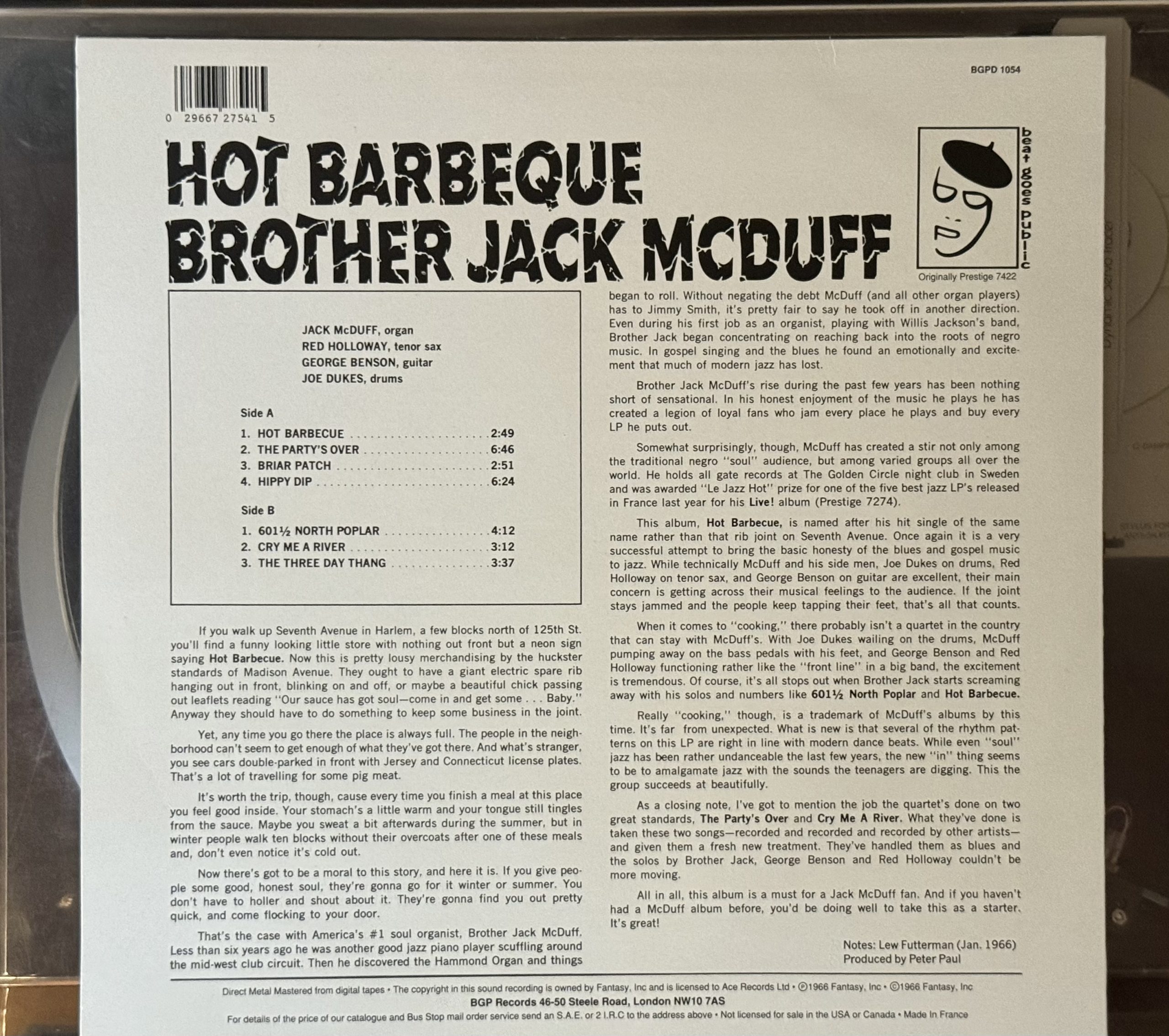
McDuff, born Eugene McDuffy in Champaign, Illinois in 1926, started out playing the bass in an early incarnation of Joe Farrell’s band, but switched to organ at the suggestion of tenor saxophonist Willis “Gator” Jackson. Jazz organists were rare in the late 1950s and early 1960s, and Blue Note had Jimmy Smith sewn up at the time, so the young McDuff must have been a draw for labels looking to capitalize on the sound. He ultimately landed at Prestige, where he played with Grant Green, Sonny Stitt, Gene Ammon and others. By 1963 he pulled together a quartet with Red Holloway on tenor saxophone, Joe Dukes on drums, and a 19-year-old Pittsburgh based guitarist named George Benson, who made his debut with the McDuff band. Holloway was a versatile saxophonist from Helena, Arkansas who had played with Yusef Lateef, Dexter Gordon, and Billie Holiday, but also with R&B and blues acts like Willie Dixon, B.B. King, Aretha Franklin, Junior Parker, and Etta James. Joe Dukes, born 1937 in Memphis, played for most of his career with McDuff, but also recorded sessions with Idris Muhammad and Lonnie Smith. And we’ve written about George Benson before.

Hot Barbecue” opens in an unexpected place, with a samba rhythm and the band shouting out “Hot barbecue… today!” before proceeding into an extended blues. The point of departure for the brisk McDuff original appears to be Smith’s The Cat; there is some of the same rhythmic drive in Benson’s guitar and the drum part, and in Holloway’s solo, which has more than a little boogaloo about it. Benson’s solo, by comparison, is economically funky; both players only get one verse. If you had your eyes closed, you’d be hard pressed to tell the difference between McDuff’s approach on the organ and Smith’s, though the former leans more into expressive runs where the latter tends to favor suspensions. For this song McDuff even uses the Smith tone, which involves pulling out the first three drawbars on the “B” preset on the top manual of the organ, giving a rich, bluesy sound. But where Smith might have jammed on this fun tune for a while, McDuff is in and out in only three minutes.

By contrast, “The Party’s Over” demonstrates a completely different tone, with McDuff playing the melody on a high flute-like setting. The Camden/Green/Styne classic here gets an amiable, ambling treatment, with McDuff and Holloway playing chordal stabs in unison as if to suggest an entire horn section. Benson’s solo keeps to his trademark clean tone while still taking opportunities to elaborate the harmonies. Dukes trades eights with the rest of the band, and McDuff takes two high solo verses and leans into a fade-out.

We’re back into a Latin influence for the fast-driving “Briar Patch,” a sort of soul rhumba that gives Benson and Holloway the opening melodic statement in parallel fifths and sixths before McDuff takes a quick solo on the tonic and the blues note. Benson’s solo is noteworthy here, a casually whipped-off flurry of triple and syncopated meter. The tag is punctuated by exclamations from the organ, and again we’re in a fade-out.

Tempos are considerably more relaxed for “Hippy Dip,” but don’t be fooled; the chromatic descending bit in the second half of the theme will make you sit up straight and grab your headphones. By the time we come back around to the chromatic ascent at the end, you might be saying “What the heck was that?” This is a lot more than the casual soul jazz that we’ve heard so far, and the changes keep things interesting throughout the solos, with Holloway suggesting a little Cannonball Adderley in his approach. Benson’s cooler approach is deceptive, as he rips off a set of ascending tones that show his mind at work. McDuff leans into the tonal shifts with such abandon that you can be forgiven if you lose track of what key we’re in. This McDuff original is one that should be in rotation more, but relatively few acts have covered it. (Though “few” is not “none”; see below.)

601 1/2 North Poplar” takes us back into an animated boogaloo, with a a fierce group chorus and a fiery Benson solo to start things off. Holloway’s solo roots around in the corners of the soul kitchen and takes us down into the basement before McDuff fires up the afterburner, leaning hard on the submediant for an entire two verses as he rips improvisation after improvisation. The band repeats the descending line from the theme into the fade-out.

Arthur Hamilton’s “Cry Me a River” is introduced by Benson harmonizing with Holloway, with punctuation by McDuff. This is clearly Holloway’s show, though, and he gives us a deeply soulful run through the melody before turning it over to McDuff. Brother Jack takes some rhythmic liberties as he leans into the crying corners of the song, and continues to give little shouts at the edges of the outro. The band takes a breath and launches into “The Three Day Thang,” which reads like an uptempo version of some of the chromatic edges of “Hippy Dip” but is really a fast blues. McDuff is on fire throughout his solo, taking off some of the restraint that characterizes the rest of the record. The group leans into a suspension to finish.

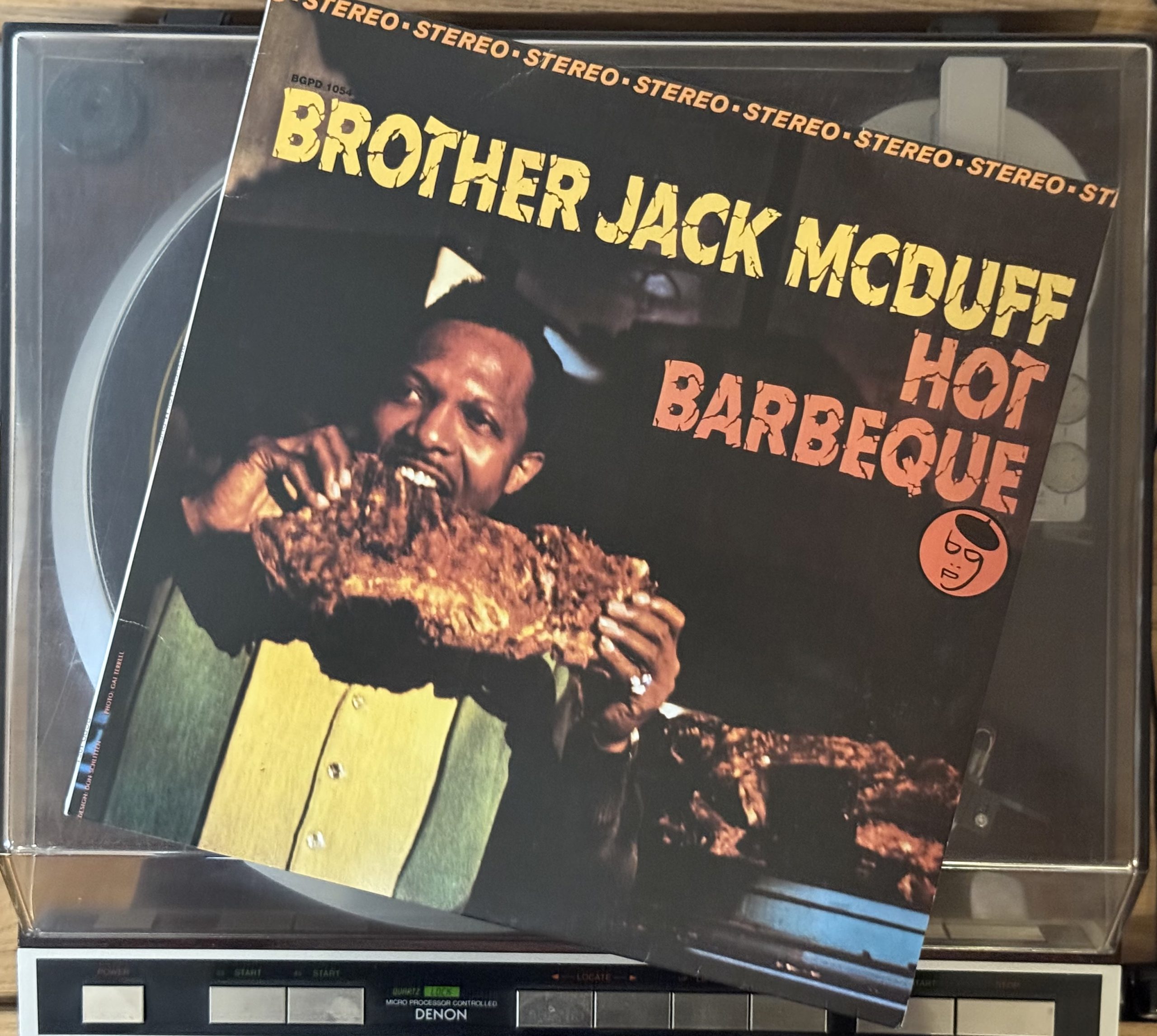
Hot Barbeque, with its rib-eating cover and Latin intro, sets itself up as a casual piece of soul jazz. But the expressively restrained solos and, especially, harmonic sophistication of the performance belie that first impression. Brother Jack had a lot on his mind, and the album is a memorable subversion of the organ combo genre. When we hear from him again, he will have subverted it even further. Next week, though, we’ll check in on how Jimmy Smith was evolving along with the 1960s.

You can listen to this week’s album here:

BONUS: Here’s a live performance of McDuff’s quartet from the RTF Festival in France in 1964, just a year or so before this album was recorded:

BONUS BONUS: While my dreams of a full-on “Hippy Dip” revival may be in vain, there are a few pretty good modern covers out there, including this one by a quintet led by guitarist Sam Dunn here:

Kickoff 2019

One of the things I missed most about Veracode while we were part of CA Technologies was the company kickoff meeting. Starting around 2010 we brought all our employees together at the beginning of each fiscal year to check in on the state of the business, get excited about what was to come, and reconnect with our colleagues. There wasn’t really a budget for us to do that last year as a CA business unit. But this year, as a newly independent standalone company, we brought everyone together, all 700+ of us.

And it was pretty amazing. It was great to see all my coworkers from London, San Francisco, Singapore and Prague, to spend time with old friends, and blow off a little steam. But it was especially good to be reminded that what we do as a company matters deeply for our customers and their customers and that we are making a difference.

Doing it wrong

  
Sacramento Bee: UC Davis spent thousands to scrub pepper-spray references from Internet. You’d think it would go without saying in this, the age of the Streisand Effect, that the best way to eradicate mention of a horrible mistake online is not to try, but rather to own up to it and address it head-on. The absolute worst way is to try to whitewash it via dubious SEO tricks. 

Guess which path UC Davis chancellor Linda Katehi chose?

Fresh From delicious today

Senate Control Could Come Down To Whole Foods vs. Cracker Barrel | FiveThirtyEight
Entertaining analysis showing, perhaps, only that marketers are better at understanding the country’s political segmentation than political campaign planners are.

Aunt Maria’s Vermont Maple Sugar Pie, 1945 – A Vintage Pie Recipe Test – The Mid-Century Menu

The Questa Project | I Love Typography
Seriously cool new font family, worth checking out.

Fresh From delicious today

Lou Reed leaves $30m fortune | Music | theguardian.com
Lou was pretty good at getting paid, it turns out.

Share extensions in iOS 8: Explained | iMore
The how of getting your app onto the iOS 8 "Share" menu.

How to Avoid Lowering Your Prices | SiriusDecisions
Sound strategies for avoiding pricing messes in the field. I’ll add another vote for offering a longer contract rather than lowering price. The big secret here is that it’s very hard to change the price at which a subscription is established, so don’t lock in a low rate to win a customer; give free months of service instead.